
No products in the cart.
Return To Shop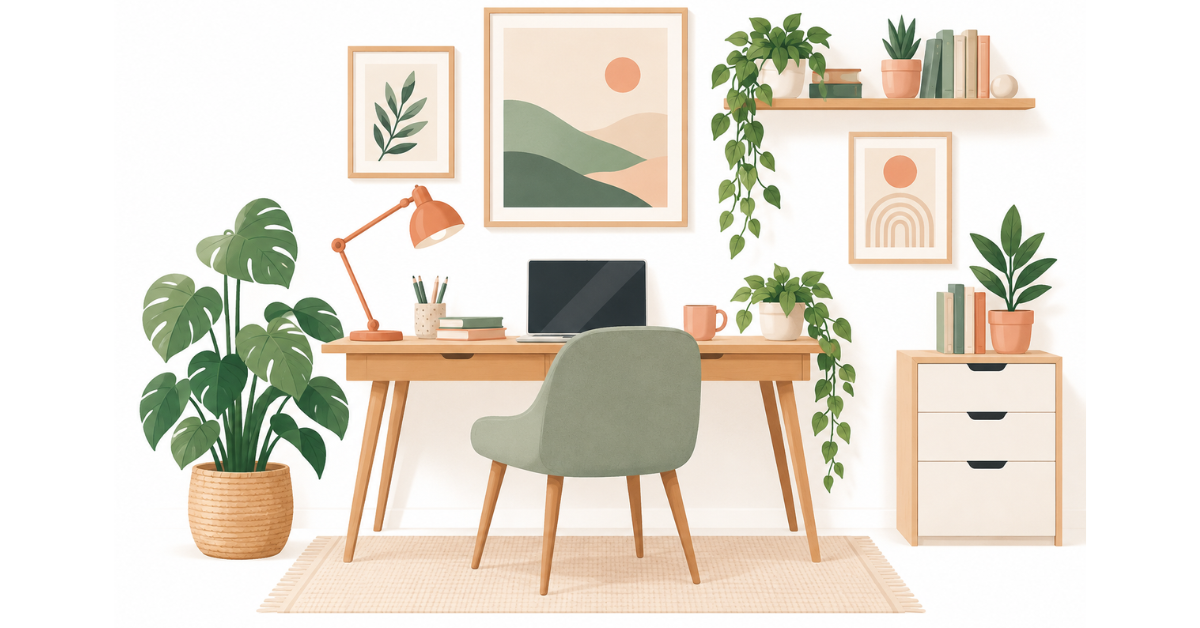
Home Office Decor: How to Create a Workspace That Feels Like Yours
A home office can be perfectly functional and still feel like it belongs to nobody.
You may have a desk, a chair and everything you need for the workday, yet the space can still feel cold, unfinished or impersonal. Adding more decorative items does not necessarily solve the problem either. A workspace can become visually busy just as easily as it can feel empty.
Good home office decor sits somewhere between those extremes.
The goal is not to recreate someone else’s picture-perfect workspace. It is to create an environment that feels comfortable, intentional and personal while still working for the way you actually use it.
That means starting with the space you already have, deciding how you want it to feel, and choosing decorative elements that support that feeling rather than competing with your work.
Here’s how to approach it.
Start With How You Want Your Home Office to Feel
Before choosing wall art, colors or decorative accessories, think about the experience you want from the room.
Think Beyond “Good-Looking”
A home office can look attractive in a photograph without being particularly enjoyable to work in.
Instead of asking only, “What will make my office look better?”, ask:
- Do I want the space to feel calm?
- Do I want it to feel warm and comfortable?
- Do I want it to feel creative?
- Do I want it to feel clean and organized?
- Do I want it to have more personality?
- Do I want it to feel energetic without becoming distracting?
These questions give you something more useful than a collection of decorating ideas: a direction.
Once you know the feeling you are trying to create, individual decorating decisions become easier.
Choose the Feeling Before the Decor
It is tempting to start with something you like—a particular poster, color, photograph, plant or desk accessory—and build the room around it.
Sometimes that works. But starting with the overall feeling gives you more control.
For example, a calm workspace might benefit from a restrained color palette, limited decorative elements and plenty of visual space. A more expressive workspace might use stronger colors, artwork and personal objects.
Neither approach is inherently better.
The important thing is that the individual elements feel like they belong together.
Work With the Space You Already Have
You do not need a dedicated home office to create a space that feels intentional.
If you’re still working out the practical foundation of your workspace, our guide to Remote Work Setup: How to Build a Practical Workspace That Works for You covers the functional side of creating a workspace before you start decorating it.
A desk in a bedroom, a corner of a living room or a small workspace in a shared room can all be decorated effectively.
Before buying anything, look at what is already there.
What do you like? What feels out of place? What is taking up unnecessary space? What could be moved, removed or rearranged?
Sometimes the biggest improvement to your home office decor comes from editing the existing space rather than adding something new.
Choose a Simple Visual Direction
Once you know how you want the room to feel, give the space a simple visual direction.
You do not need a complicated decorating formula. A few consistent choices can make a workspace feel much more cohesive.
Start With a Small Color Palette
A simple color palette makes it easier for different elements to work together.
You might start with the colors already present in your desk, walls, flooring or furniture. Then choose one or two additional colors that complement them.
This does not mean everything needs to match.
In fact, a workspace can feel more natural when different materials and shades are allowed to coexist. The goal is simply to avoid having every decorative item compete for attention.
A limited palette also makes future decorating decisions easier. When you find something you like, you can quickly ask whether it fits the visual direction you have already established.
Decide What Should Stand Out
Not everything in the room needs to be a focal point.
Choose one or two areas that you want people to notice first. That could be the wall behind your desk, a piece of artwork, a bookshelf or even the desk itself.
Once you have a focal point, the rest of the room can play a supporting role.
This creates visual hierarchy and prevents the workspace from feeling like a collection of unrelated objects.
Mix Practical and Decorative Elements
The best home office decor does not always have a purely decorative purpose.
A notebook can be useful and visually appealing. A desk lamp can provide necessary lighting while contributing to the look of the room. Storage can keep everyday items organized while also becoming part of the visual design.
This approach helps you avoid filling the workspace with objects that simply take up space.
When practical and decorative elements work together, the room can feel more intentional without becoming crowded.
Build the Decor Around Your Desk
The desk is usually the visual and functional center of a home office, so it makes sense to begin there.
Keep the Desk Visually Balanced
Your desk does not need to be completely empty to look organized.
It simply needs a clear relationship between the things that belong there and the space around them.
Keep the items you use frequently accessible. Give less frequently used items another home.
If everything you own is sitting on the desk, decorative elements can easily disappear into the clutter.
A little empty space can make the things you choose to display more noticeable.
Add Personality Without Creating Clutter
Your desk is one of the easiest places to add personality.
You might display a small personal object, photograph, piece of artwork or something connected to an interest outside work.
The key is selection.
You do not need to display every object that has meaning to you. Choose a few things that contribute something to the space.
Think of your desk as an environment you interact with every day, rather than a shelf that needs to hold everything you like.
Use the Area Around the Desk
The space immediately surrounding your desk can be just as important as the desktop itself.
The wall behind the desk, the area beside it and the space above or around your monitor can all contribute to the overall appearance.
Instead of decorating each area independently, look at the desk and its surroundings as one visual zone.
This makes it easier to create a workspace that feels cohesive rather than pieced together.
Use Your Walls Intentionally
Walls offer one of the biggest opportunities in home office decor because they can change the character of a workspace without taking up valuable desk space.
Choose Wall Art That Fits the Space
Wall art should complement the room rather than simply occupy an empty wall.
Consider the size of the wall, the furniture beneath it and the visual weight of the other elements nearby.
A large wall may benefit from one substantial piece, while a smaller workspace might work better with something more restrained.
The subject also matters.
Choose artwork that you genuinely enjoy looking at. Your workspace is somewhere you may spend hundreds of hours each year, so there is little value in choosing something simply because it happens to be fashionable.
One Statement Piece vs. Several Smaller Pieces
There is no universal rule that says a wall needs either one large piece or several smaller ones.
A single statement piece can create a strong focal point and keep the room visually simple.
Several smaller pieces can create a more collected and personal feeling.
The choice depends on the size of the wall, the surrounding furniture and the atmosphere you want.
When using several pieces, give them some visual relationship—whether through color, subject, framing or overall style.
Create a Gallery Wall Without Making It Busy
A gallery wall can bring personality to a home office, but more pieces do not automatically make a better gallery wall.
Start by deciding what connects the pieces.
It could be a similar color palette, a shared theme or simply a consistent frame style.
Leave enough space between pieces so that they can still be appreciated individually.
And remember that a gallery wall does not have to cover an entire wall. A smaller, deliberately arranged group can often feel more intentional than filling every available space.
Don’t Treat Every Empty Wall as a Problem
An empty wall is not necessarily unfinished.
Negative space can make a room feel calmer and give other elements room to breathe.
If the workspace already has enough visual interest, leaving one wall relatively simple may actually improve the overall balance.
Add Color, Texture and Warmth
Color is only one part of making a home office feel inviting.
Texture and material can also change how the space feels.
Use Color Deliberately
You do not need brightly colored furniture or walls to make a workspace interesting.
Small amounts of color can be enough.
A piece of artwork, a few accessories or a textile can introduce color without overwhelming the room.
If the room is already colorful, adding more may not improve it. Sometimes repeating an existing color in one or two smaller details is enough to make the space feel more connected.
Add Texture
Texture helps prevent a workspace from feeling flat or sterile.
Different materials can create visual variety: wood, fabric, paper, metal and other finishes can each contribute something different.
You do not need a large collection of decorative objects to create this effect.
A few contrasting materials can make a simple workspace feel considerably more comfortable.
Make the Space Feel Less Sterile
A purely functional setup can sometimes feel more like a workstation than part of your home.
Personal objects, artwork, softer materials, color and small decorative details can help bridge that gap.
The goal is not to make the office look like a living room.
It is to make the space feel like a place where a person actually lives and works.
Use Lighting as Part of the Decor
Lighting is practical, but it also has a major influence on how a workspace feels.
Work With Natural Light
If your workspace receives natural light, consider how that light changes throughout the day.
Furniture placement, curtains and the position of decorative elements can all influence how the room looks.
Natural light can also make colors and textures appear differently at different times, so consider the space throughout the day rather than judging it at one particular moment.
Add Layers of Light
A single overhead light does not have to do all the work.
Different sources of light can create a more comfortable and visually interesting environment.
For example, general room lighting can provide overall illumination while a desk or nearby light adds another layer.
This also gives you more flexibility as the day changes.
Avoid Lighting That Makes the Space Feel Harsh
A workspace can be beautifully decorated and still feel unpleasant if the lighting is too harsh or poorly positioned.
Think about how the lighting interacts with the rest of the room.
You want the decorative elements to be visible without creating an environment that feels overly bright, stark or distracting.
Personalize Your Home Office
The most successful home office decor is rarely the result of following a template exactly.
It usually comes from making the space reflect the person who uses it.
Display Things That Actually Mean Something to You
Personalization does not require filling your office with memorabilia.
One meaningful photograph can say more about you than a shelf full of decorative objects chosen simply because they look good together.
Think about the things you naturally enjoy seeing.
Books, photographs, artwork, travel memories, collections or small personal objects can all contribute to the character of a workspace.
Let Your Work Influence the Space
Your work can also influence how you decorate.
Someone who spends much of the day writing may appreciate a visually calm environment. Someone doing creative work may enjoy more expressive elements.
The point is not to create a stereotypical workspace for a particular profession.
It is to recognize that your working habits can influence what kind of environment feels right for you.
Avoid Copying Someone Else’s Workspace Exactly
Online workspace inspiration can be useful, but it can also create unrealistic expectations.
A photograph may show a beautiful room without showing the size of the space, the budget involved, the amount of equipment hidden outside the frame or how practical the setup actually is.
Use other workspaces for ideas rather than instructions.
Take the elements you genuinely like and adapt them to your own room, needs and personality.
Decorate Different Types of Home Offices
The same decorating principles can work in very different spaces.
Small Home Office
In a small workspace, visual restraint becomes particularly useful.
Use the walls when appropriate, keep the desktop relatively clear and avoid introducing too many competing decorative elements.
A smaller number of well-chosen pieces can make the space feel more deliberate without making it feel smaller.
Bedroom Workspace
A workspace in a bedroom has to coexist with an environment designed primarily for rest.
This makes visual balance particularly important.
Consider how the workspace looks when you are not working. You may want decor that connects naturally with the rest of the room rather than making the desk feel like a completely separate environment.
Shared or Multipurpose Space
When a workspace shares a room with another activity, decoration can help establish a sense of identity.
A defined wall area, consistent color palette or small group of personal elements can make the work zone feel intentional without requiring permanent changes to the entire room.
Dedicated Home Office
A dedicated office gives you more freedom, but more space does not necessarily mean you need more decor.
Use the additional room to create better visual balance, storage and breathing room rather than filling it simply because the space is available.
Keep Decor From Becoming Clutter
A well-decorated office does not need to be packed with decorative objects.
Give Decorative Items a Reason to Be There
Before adding something, ask what it contributes.
Does it add personality, color, texture, meaning or visual balance?
If the answer is simply “there was an empty space,” that may not be a strong enough reason.
Leave Some Empty Space
Empty space is part of the design.
It allows the eye to rest and makes important elements easier to notice.
A clear section of wall or desktop is not wasted space. It can help the entire room feel calmer.
Keep Everyday Work Items Under Control
Paper, cables, chargers, stationery and other everyday items can quickly become part of the visual clutter.
You do not have to hide everything.
But creating designated places for frequently used items makes it much easier for the decorative side of the workspace to remain visible.
Reassess Instead of Continuously Adding
Your home office does not need to be decorated once and then left untouched forever.
As you use the space, you will discover what works and what does not.
Something that looked useful six months ago may now feel unnecessary.
Removing an item can be just as valuable as adding one.
Decorate Your Home Office Around Your Personal Style
There is no single correct home office aesthetic.
Your space can reflect your personality without fitting neatly into a design category.
Minimal and Calm
Keep the palette restrained, reduce visual distractions and allow plenty of empty space.
The focus is on simplicity rather than having nothing in the room.
Warm and Comfortable
Use softer colors, natural-looking materials and personal touches to make the workspace feel more inviting.
The aim is to create a room that feels comfortable without losing its purpose as a workspace.
Creative and Expressive
Use artwork, color and objects that reflect your interests.
This style gives you more freedom to experiment, but the same principle still applies: not every available surface needs to be decorated.
Modern and Clean
A clean visual direction can come from simple shapes, a restrained palette and carefully selected decorative elements.
Keep the overall look intentional rather than adding objects simply to make the room feel finished.
Playful and Personality-Driven
If you enjoy humor, unusual artwork, bright colors or objects with character, let the workspace show it.
A home office is part of your home, so it does not need to feel anonymous.
The key is deciding where the personality belongs and allowing the rest of the room to support it.
Common Home Office Decorating Mistakes
Even a well-intentioned decorating project can go off course.
Buying Decor Before Deciding What You Want
Shopping first often leads to a collection of disconnected objects.
Start with the feeling, color direction and focal point instead.
Trying to Fill Every Empty Surface
Empty space is not unfinished work.
Allowing some areas to remain clear can make the entire workspace feel more deliberate.
Mixing Too Many Styles
Individual pieces may look great on their own but feel confusing when placed together.
Look for some common thread between your choices.
Ignoring Scale and Proportion
A tiny piece can disappear on a large wall. An oversized decorative element can overwhelm a small desk.
Consider the size of the surrounding space before deciding what belongs there.
Choosing Appearance Over Practicality
A workspace still needs to function.
If a decorative choice interferes with your ability to work comfortably or access something you use every day, it may not be the right choice for that location.
Adding Personality Until the Space Feels Distracting
Personalization is valuable, but more personality is not always better.
Choose the things you most enjoy rather than trying to display everything at once.
Copying a Styled Workspace Instead of Adapting It
Inspiration is useful when it helps you discover what you like.
It becomes less useful when you try to reproduce someone else’s workspace without considering your own room, habits and needs.
Your office should solve your problems, not recreate somebody else’s photograph.
A Simple Home Office Decor Checklist
Before you consider your home office finished, work through this simple checklist.
Start
- What do I want the space to feel like?
- What do I already have that I like?
- What needs to stay?
- What can be removed or rearranged?
Style
- Have I chosen a simple color direction?
- What should be the visual focal point?
- Do the decorative elements feel connected?
Decorate
- Does the desk feel balanced?
- Have I used the walls intentionally?
- Does the lighting contribute to the atmosphere?
- Have I added enough color or texture?
- Have I included things that actually mean something to me?
Edit
- Is anything here only because there was an empty space?
- Are decorative items creating unnecessary clutter?
- Is there enough empty space?
- Does the workspace still function well for everyday work?
If the answers are mostly yes, you probably do not need to keep adding things.
Frequently Asked Questions
How do I make my home office look nicer?
Start by deciding how you want the space to feel, then simplify the existing environment before adding new decor. A cohesive color palette, intentional wall art, appropriate lighting and a few personal elements can make a workspace feel considerably more finished.
How can I decorate my home office without making it cluttered?
Choose fewer, more meaningful pieces and leave some visual breathing room around them. Avoid decorating every available surface, and give everyday work items a designated place so they do not gradually become visual clutter.
What should I put on my home office walls?
Choose artwork or other wall elements that fit the size and style of the room and that you genuinely enjoy seeing. One statement piece, a small collection or a carefully arranged gallery wall can all work.
How do I decorate a small home office?
Keep the visual direction simple, use wall space thoughtfully and avoid filling the desk with decorative objects. In a small room, a few well-chosen elements often have more impact than a large collection of decor.
How can I make my home office feel more personal?
Start with things that genuinely mean something to you. Personal photographs, artwork, books, meaningful objects and colors you enjoy can give the workspace character without requiring a complete redesign.
Conclusion
A great home office does not need to look like a showroom, follow the latest decorating trend or resemble someone else’s carefully styled workspace.
It needs to feel like yours.
Start by deciding how you want the space to feel. Work with the room you already have. Build the visual direction around a simple palette, create a focal point, use your walls intentionally and add personal elements that actually mean something to you.
Most importantly, remember that decorating is not about filling every available space.
A workspace can feel finished while still having room to breathe.
As you use the office, you will learn what works for you and what does not. Move things around, remove what no longer serves a purpose and allow the space to evolve.
The best home office decor is ultimately not about creating a perfect-looking room.
It is about creating a workspace that supports your work while still feeling unmistakably yours.
Related posts
A productive workspace isn’t built by one expensive purchase—it’s shaped by the small things you use every day. The right office desk accessories can help... Continue reading
Working from home has become more than just a temporary trend—it’s now a normal part of professional life for millions of people around the world.... Continue reading